

City Walls
Walk England\'s most complete medieval city walls for stunning views and 2,000 years of history.
Chester is the right fit if you want a walkable historic centre with fast links to Manchester/Liverpool and family-friendly schools; look elsewhere if you need big-city nightlife or daily international flights.
Historic Roman walls, medieval shopping rows, Chester Zoo, and riverside walks - all in England's most walkable historic city centre.
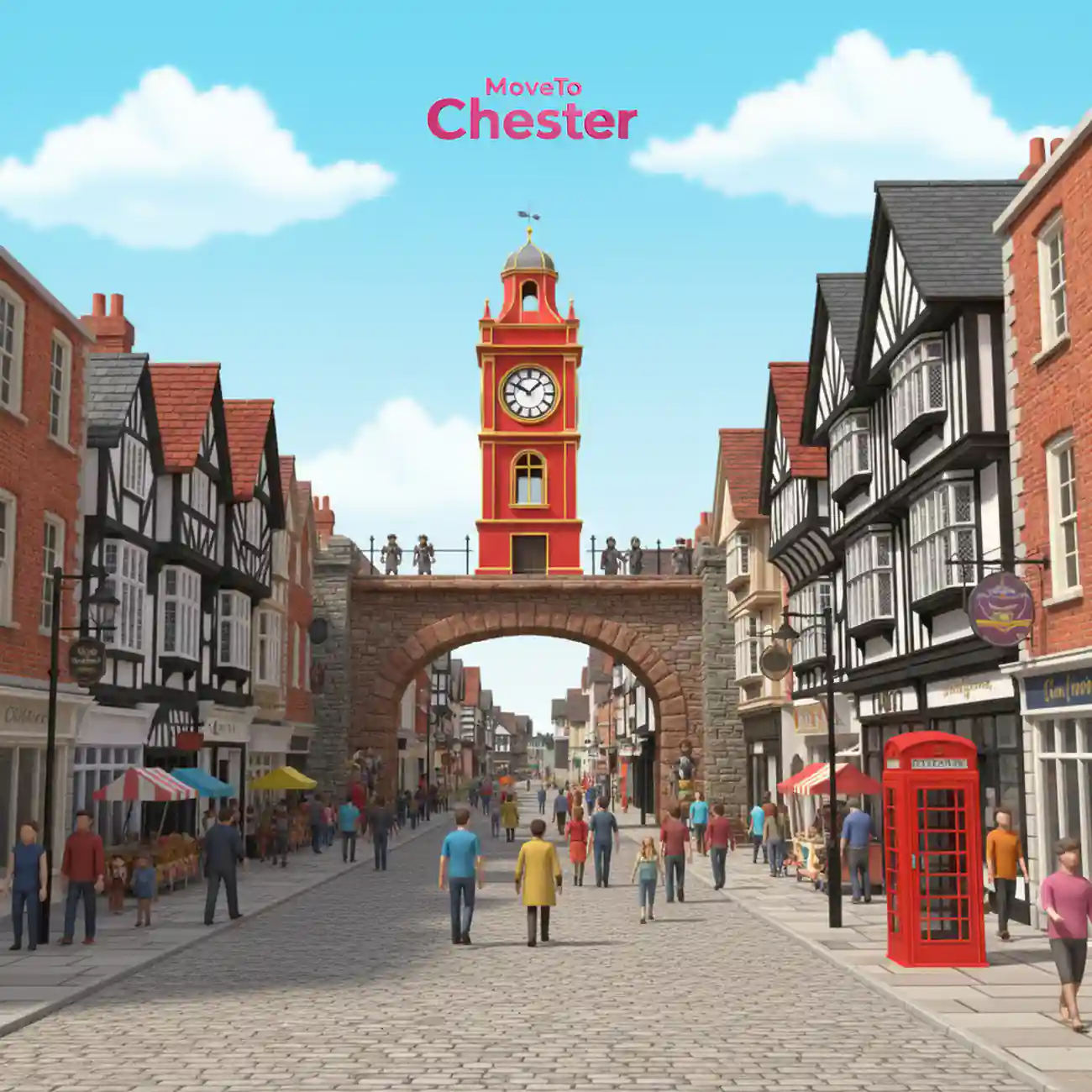
Chester is a cathedral city in Cheshire, North West England, on the River Dee, near the Wales border, but in England. South of Liverpool, south-west of Manchester. Not the same as the wider Cheshire West and Chester council area.
Jump to a section
Chester is a historic Roman city in Cheshire, North West England (not in Wales), with medieval charm, modern amenities, strong transport links, and family-friendly living just 45 minutes from Manchester Airport and 30 minutes from Liverpool Airport by car.
Romans established Chester as fortress Deva Victrix around AD 79 during Emperor Vespasian's reign. "Deva" derives from the British Celtic name for the River Dee, while "Victrix" references Legio XX Valeria Victrix garrisoned there for over 300 years.
Following Roman withdrawal in AD 410, Saxons renamed the settlement Legacæstir combining Latin "legion" with Saxon "-cæstir" (from Latin "castrum" meaning fort). The name acknowledged Chester's Roman military heritage within Anglo-Saxon linguistic patterns. By the 11th century, "Legacæstir" shortened to "Chester."
This linguistic simplification created the suffix pattern visible across England: "-chester," "-caster," and "-cester" mark former Roman military sites. Saxon "ceastre" evolved from Latin "castrum," producing place names like Manchester, Lancaster, and Gloucester. The Welsh maintained their own name Caer meaning "fort," demonstrating how different linguistic communities preserved the settlement's military identity. This pattern shows conquering peoples adapted rather than replaced existing place names, creating linguistic continuity from Roman through medieval England.
The 1,000-year-old cathedral, originally founded as a Benedictine abbey in 1092, stands 127 feet (35 metres) tall. Along with scenic river views, these historic features are part of daily life for Chester's residents.
Chester is pronounced: CHESS-ter, first syllable is stressed → CHESS-ter (not chess-TER). CHESS (like the board game) - /tʃes/ and ter (rhymes with "stir") - /tər/ with the full IPA: /ˈtʃɛstər/. If you are foreigner practice in sentence: "Chester is in Cheshire, west of Manchester." (CHESS-ter iz in CHESH-eer, west ov MAN-chess-ter)
Chester sits in Cheshire, North West England, about 20 miles south of Liverpool and 35 miles south-west of Manchester, near the Welsh border but in England.
City ≠ whole borough: two different boundaries
Sources: ONS Census 2021. City and borough figures use different boundaries; do not swap them.
Train times vary by service and time of day.
The city of Chester is in England. Some nearby suburbs people casually call “Chester” (for example parts of Saltney) sit in Flintshire, Wales, with Welsh council services.
Cheshire West and Chester borders:
What it is
Unitary authority covering Chester plus towns and rural parishes
Main towns
Chester · Ellesmere Port · Northwich · Winsford
Make-up
45 wards · 97 parish councils · large rural share
Example villages
Christleton · Tarporley · Frodsham · Helsby · Malpas
Chester the city is smaller than Cheshire West and Chester the council area. That matters for schools, council tax and neighbourhood choice.
Chester's weather reflects the temperate maritime climate of northwest England, with mild summers, cool winters, and consistent rainfall year-round. Chester is slightly drier and sunnier than nearby cities like Liverpool or Manchester because its location east of the Welsh hills blocks some Atlantic rain.
Climate Comparison: Chester's climate is similar to cities like Bruges, though slightly cooler and wetter, and far milder than places like Carcassonne or Quebec, which have more extreme temperatures. Within the UK, Chester's mix of below-average rainfall and consistent greenery gives it a "sweet spot" climate: drier than Manchester or Liverpool, yet still lush and temperate.
Chester combines 2,000 years of Roman heritage with modern family amenities, ranking as the second-safest city in Cheshire and offering excellent schools and transport links.
Chester is regarded as one of the safest locations within Cheshire's 321 towns, villages, and cities. Residents consistently report feeling secure, and this perception is supported by statistics: based on total reported incidents and a population of nearly 100,000, an individual has a 92.55% chance of facing any reported crime over the course of a year.
The city's low crime profile reinforces this impression. Anti-social behaviour is the most common offence, while serious crimes such as theft from a person, murder, and arson are rare. From the historic centre to newer neighbourhoods, areas are well lit and regularly patrolled, which contributes to safety during evening walks.
External rankings echo these findings, with Chester listed as the second safest city in Cheshire and the 46th safest place in the UK. However, some resources, including CrimeRateCo UK, show higher crime data rates for Chester because they do not place the city in its full context. Reported figures are skewed by incidents linked to racecourse events, which attract more than 300,000 visitors each year.
The safest areas in Cheshire are usually smaller towns and villages such as Knutsford (40 per 1,000), Frodsham, and Tarporley, rather than the larger urban centres. Nationally, Chester's safety is comparable to some of the safest UK cities, including York and Bath.
Data: Numbeo and UK government crime reports
Today Chester is most famous for its Roman city walls, the most complete in Britain, encircle the old city centre, where medieval Rows (covered, two-level galleries) house boutique shops and cafés.
Historically Chester served as Rome's largest complete legionary fortress in northwest Britain, established in AD 79 to house Legio XX Valeria Victrix (English Heritage). The 60-acre fortress featured Britain's largest stone amphitheater with 7,000-8,000 capacity, commanding the River Dee crossing and routes into North Wales (Chester Archaeological Society).
Roman Chester operated as the staging ground for campaigns into Wales and potential Irish Sea expeditions. The fortress harbor, located at today's Roodee racecourse site, facilitated naval operations. Chester ranked among Rome's three major British fortresses alongside York and Caerleon (English Heritage).
Following Roman withdrawal (AD 410), Chester evolved into a major medieval port. By the 10th century, the city traded extensively with Dublin, exporting salt, cloth, and metalwork while importing furs and fish (Chester Civic Trust records). The city's position made it a primary western port for Irish and continental trade.
Chester's commercial importance peaked in the 13th-14th centuries. Edward I used the city as his supply center for Welsh campaigns, while merchant trade generated the unique Row covered galleries built over Roman ruins. This prosperity established Chester as northwest England's administrative center (Cheshire West and Chester archives).
Chester's defensive walls, originally Roman and continuously maintained, created a fortified stronghold controlling England's western approaches. During the English Civil War, Chester served as a key Royalist position due to its access to Irish Sea ports, becoming one of the last strongholds to fall to Parliamentary forces in 1646 (English Civil War records).
The combination of Roman military infrastructure, medieval commercial networks, and continuous defensive importance shaped Chester's development over 1,500 years.
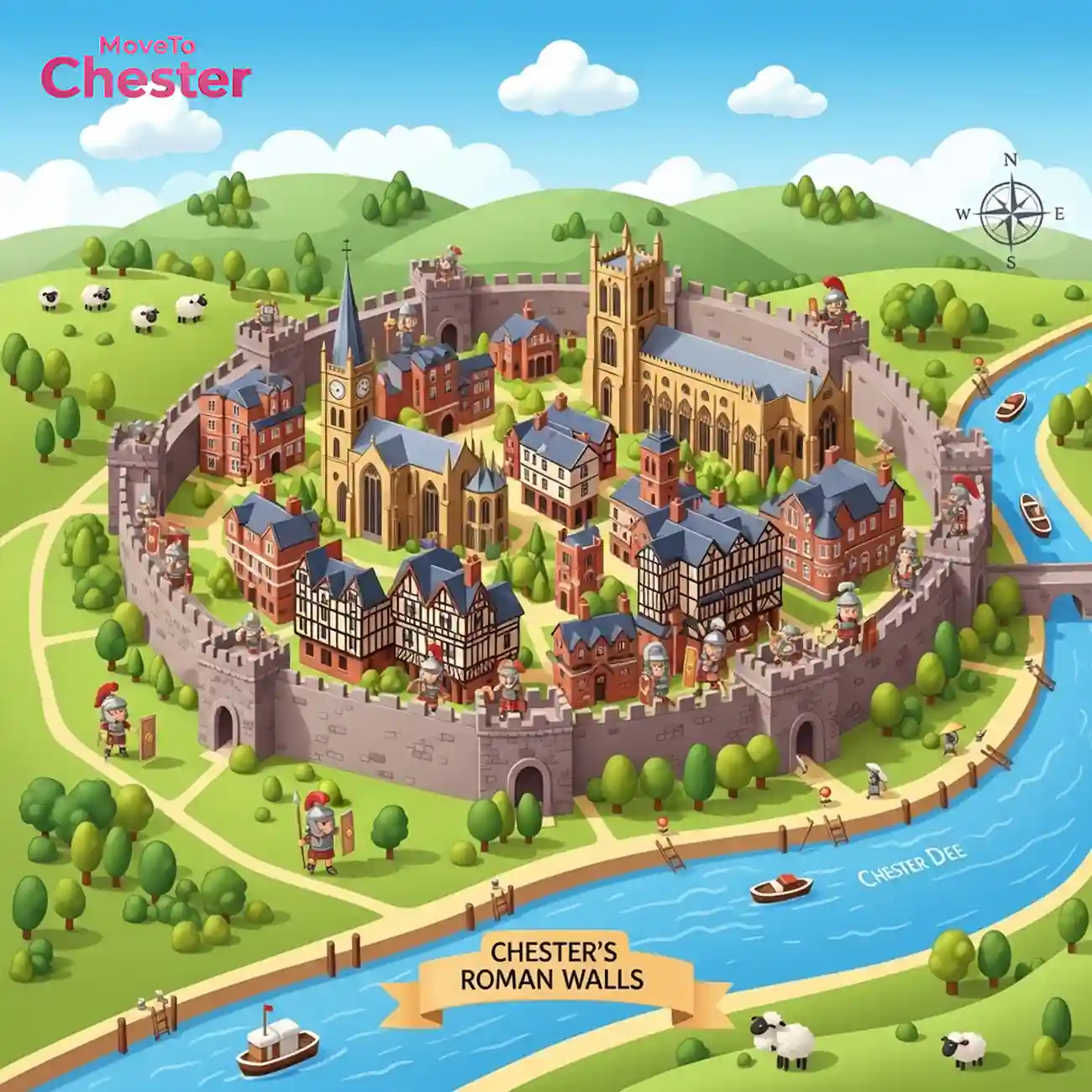
Chester is often compared to other historic cities such as York, Bath, and Canterbury in England, as well as Carcassonne in France, Bruges in Belgium, and Avignon in France.
While not a UNESCO World Heritage Site, Chester is a heritage-rich city that often feels like one.
Yes. Chester is widely regarded as exceptionally welcoming. In January 2025, Booking.com named it the most welcoming place in the UK and the tenth most welcoming worldwide. Traveller reviews praised the city's friendly locals and vibrant community spirit, which make visitors feel at home.
Yes. Chester is recognised as one of the UK's cleanest cities. A 2022 Buildworld study ranked it third nationwide with a score of 75 out of 100, based on factors such as the quality of green spaces, recycling performance, and council spending on environmental services.
Nine state schools on the English side of Chester hold an Ofsted Outstanding rating, including Bishops' Blue Coat.
Founded 1839 (first purpose-built UK teacher training college). Campuses in Chester, Warrington and Shrewsbury. Strong teaching reputation in Education, Nursing and Social Work.
A-Levels, T-Levels, vocational courses and apprenticeships for school leavers and adult learners.
UK's largest zoo on the city's doorstep. The Reserve safari lodges (from 2025) add overnight stays overlooking the African Savannah.
Victorian park by the River Dee: lawns, play area, miniature railway and café just outside the walls.
On the River Dee, about 400 metres from Chester Cross. Famous for its unique shape and the May Festival (Boodles May Festival).
Easy walk-in from shops and hotels. Big crowd days, then the centre empties again after the last race.
Riverside paths, boat cruises and cafés. Good for everyday strolls, birdwatching (swans, herons, kingfishers) and events like the Chester Raft Race.
18th-century route between the Midlands and North Wales. Still a working leisure corridor.
13th-century two-tier covered galleries above street shops - unique to Chester.
Concerts and organ recitals at the cathedral; amphitheatre, Roman Gardens and almost-complete walls from fortress Deva Victrix.
Countess of Chester Hospital is the city's main healthcare facility, offering:
Residents near the border also benefit from access to NHS Wales services in Flintshire, providing additional healthcare options.
Chester has a vibrant dining scene with over 380 restaurants, cafés, and eateries across the city and its immediate suburbs, from high-end fine dining to traditional pubs and global street food.
Chester's blend of Roman heritage, cathedral tourism, and its world-class zoo supports a food scene far larger than expected for a city of under 100,000 residents.
Whether relocating for work, family, or lifestyle, choosing the right neighbourhood is the first step to making Chester your home. The city offers historic living, family-friendly suburbs, green spaces, and cross-border communities, ensuring a match for every lifestyle. From riverside luxury to village charm, finding the right area is about aligning your needs with what each neighbourhood provides.
Chester's average house price is £257,000 (June 2025), with family suburbs like Hoole starting from £280,000 and premium riverside areas reaching £550,000+.
Data updated quarterly from Rightmove, Zoopla, ONS Gov.uk, Plumplot, and local estate agents • Last updated: September 2025
Key Features: Trendy village feel, independent cafés, young professionals. Known for its vibrant community atmosphere with excellent local amenities and strong transport links to the city centre.
Key Features: Premium area, green spaces, River Dee access.
Key Features: Bustling, walkable, nightlife access.
Key Features: Family-oriented, excellent schools, quiet streets.
Key Features: Rural feel, outstanding primary school.
Key Features: Walk to centre, café culture, historic charm.
Key Features: River proximity, local shops, schools.
Key Features: Quiet, parks, family focus.
Key Features: Leafy, parks, sought-after.
Key Features: On Welsh border, community feel, more affordable.
Key Features: Schools, amenities, strong community.
Key Features: New developments, village vibe.
Key Features: Affordable, community projects, schools.
Key Features: Schools, quiet, close to countryside.
Key Features: Village life, rural but near the city.
Rental and sale prices sourced from local estate agents and property portals • Updated: September 2025
*Cross-border Communities: Western suburbs such as Saltney and Broughton lie in Flintshire, North Wales. Residents may identify as living in Chester, but their schools, waste collection, and council tax are managed by Welsh authorities. This cross-border quirk often raises the question of whether Chester is in England or Wales - the answer depends on which side of the River Dee or the boundary line you live on.
Young professionals favour the city centre for its nightlife, cultural venues, restaurants, and transport links, despite higher rents. Hoole appeals with its trendy streets, Victorian character, and moderate rents, while Newton offers affordable suburban living close to the city with good transport.
Families often choose Curzon Park for its prestige, schools, and green spaces, the village charm of Christleton, or the family-friendly suburbs of Great Boughton and Westminster Park, known for spacious homes and community amenities.
Retirees are drawn to the quiet, well-connected areas of Vicars Cross and Huntington, or the scenic, tranquil village life of Saughall.
First-time buyers look to affordable suburbs such as Upton, Blacon, Saltney, and Newton, which combine reasonable prices with future growth potential.
Each area balances access to Chester's amenities with lifestyle priorities - from urban energy to suburban calm and village tranquillity.
Find our in-depth guide: Chester Housing and Neighborhoods →
A vibrant urban lifestyle with nightlife, cultural venues, restaurants, and excellent transport links. Higher rents are offset by convenience and career opportunities.
Trendy and stylish, with independent shops and Victorian/Edwardian character. Moderately priced rents and easy access to the city make it popular for professionals seeking charm without city-centre costs.
Affordable housing area with steady growth and good transport links. Offers a suburban feel close to the city centre, ideal for peaceful living near work opportunities.
Prestigious neighbourhood with large homes, excellent schools, and green spaces. Safe, established, and popular with families seeking long-term stability.
A village setting with good schools, open spaces, and community spirit. Combines rural tranquillity with quick access to Chester.
Strong community feel, quality schools, and a variety of housing options. Parks and facilities support family life and children's activities.
Spacious homes, quiet streets, and local schools. Offers suburban calm with supportive community amenities.
Quiet and well-connected, with good community facilities, healthcare access, and affordable housing. Ideal for comfortable retirement living.
Peaceful, with local shops and green spaces. Easy access to Chester city centre provides convenience without daily urban busyness.
Rural and scenic, offering tranquillity, nature, and a welcoming village community. Appeals to retirees prioritizing peace and social connection.
Affordable housing and good transport links. Suburban but practical for those starting their property journey.
Low property prices and strong community focus. Family-friendly and accessible for budget-conscious buyers.
Cost-effective homes with reasonable Chester access. Border location combines affordability with character.
Affordable properties with investment potential. Close to amenities yet peaceful, balancing value with future growth.
Chester's cost of living sits 38.5% below London but ~31% below Manchester, with monthly expenses for a single person averaging £710 excluding rent or £1,300 including rent..
Living costs in Chester vary by household size: a single person needs £1,300-£1,610/month (income £23k-£28k), couples spend £1,730-£2,300/month (income £44k-£60k), and families of three face £2,240-£2,910/month (income £36k-£50k). Larger families should budget proportionally more for housing, groceries, and transport. Check our in-depth calculator of What does it Cost for First Month's Rent Setup Costs?
Chester accommodates different household budgets effectively. Essential monthly expenses start around £600 for individuals and scale to £1,200+ for families, with housing representing the largest variable cost.
Chester's cost structure favors shared living arrangements, with couples achieving 20-25% per-person savings compared to individual living, while families benefit from fixed council tax rates regardless of household size.
Chester's first month setup: Initial setup costs range £2,500-£3,500 including security deposits, utility connections, and basic furnishings.
Monthly living costs by household type:
Chester requires significantly lower incomes than London equivalents. Single people need £23,000-£28,000 annually, while families need £36,000-£50,000 combined income for comfortable living with savings. See detailed first month setup cost breakdown.
To comfortably cover living expenses and build savings in Chester, steady employment income is essential, especially for families.
Single person: £23,000-£28,000 annually
Monthly costs: £1,300-£1,610 including rent, utilities, groceries, council tax, and transport. Full-time employment in junior professional, office, hospitality, or skilled trade roles provides financial stability.
Couple: £44,000-£60,000 combined annually
Monthly costs: £1,730-£2,300 including rent. Both adults working at average Chester salaries (£22,000-£30,000 each) can cover expenses and save. Single-income households need higher earners.
Family of three: £36,000-£50,000 combined annually
Monthly costs: £2,240-£2,910 including rent. Financial stability requires both adults working (full-time or one full-time, one part-time). Single-earner families need mid-level professional salaries.
Chester's cost of living is about 31% lower, and offers a quieter, safer environment and easier countryside access. A family of three in Manchester should expect £1,950-£2,650 in monthly costs (including rent) and a combined income of £36,000-£45,000/year to live comfortably and save.
Living costs are at least 38.5% higher than Chester, with housing, transport, and daily essentials considerably more expensive or 26% higher than Chester excluding rents. In return, London offers higher salaries and a faster-paced lifestyle. A family of three typically faces £3,000-£4,200 in monthly expenses and needs a household income of £60,000-£75,000/year to meet costs while saving.
Salaries in Chester are slightly below the UK national average, but this is balanced by a lower cost of living compared to the South East. What's "doable" depends on industry and experience.
(retail, hospitality)
£21,000-£25,000
(NHS nurse, council officer)
£28,000-£40,000
(accountant, marketing manager, financial analyst)
£35,000-£55,000+
(software developer, senior finance roles)
£40,000-£70,000+
Overall, while London offers higher salaries, Chester's balance of steady local wages and affordable living costs makes it a financially viable and attractive place to live and work.
Dual-income households achieve financial stability more reliably than single earners. Solo earners require higher-paying roles above £30,000 or strict budgeting for comfortable living with savings potential. Families should budget for childcare costs, school expenses, and emergency funds beyond everyday living costs. Chester's employment sector supports various income levels, from entry-level retail positions at £21,000-£25,000 to experienced professionals earning £35,000-£55,000. Regional commuters to Liverpool and Manchester can access higher salaries of £40,000-£70,000 while maintaining Chester's lower living costs.
Council Tax is a local property-based tax introduced under the Local Government Finance Act 1992. It is applied to all domestic properties and collected by local councils to fund vital community services, including:
All residents aged 18 or over living in a property are jointly liable.
If the property is vacant, the owner is responsible.
Some people qualify for discounts or exemptions, such as:
If Council Tax is not paid:
👉 Importantly, Council Tax is mandatory by law. Arguments based on "consent" or personal disagreement with the system hold no legal weight.
In Chester (administered by Cheshire West and Chester Council), Council Tax works the same way as nationally, but the actual amount varies by property valuation band.
Properties are placed into bands (A-H) based on their value as of April 1, 1991. Each band pays a set proportion of the "Band D" rate, which is the national reference point.
*Figures approximate - they vary slightly by parish and annual budget decisions
New residents can streamline utility setup through bundled services like Utility Warehouse, or choose individual suppliers for electricity, gas, water, and broadband.
Bundle utilities with providers like Utility Warehouse to reduce monthly bills by 10-15% and simplify billing to one monthly payment. Find utilities & broadband options →
Complete these essential tasks within your first month: Register utilities, find a GP, set up council tax, explore transport options, and connect with local groups.
This checklist is designed for clarity and practical use. It covers legal registrations, community connections, and orientation steps specific to Chester. The budget and service costs reflect Chester's 2025 living expenses.
Chester offers direct train services to London (2 hours), Manchester (1 hour), and Liverpool (40 minutes), plus easy access to Manchester Airport (45 minutes by car or train).
City center parking: £1.20-£2.50 per hour. Park-and-ride services available from outer areas for £3 daily.
Chester enjoys a mild maritime climate with average summer highs of 20-22°C and winter lows rarely below 2°C, receiving less rainfall than Manchester due to its sheltered geography.
Chester's position east of Liverpool provides shelter from Atlantic weather systems, resulting in:
The temperate climate supports outdoor activities most of the year, from River Dee walks to Chester Zoo visits and racecourse events.
England's most complete walled city offers 2,000 years of history in a compact, walkable centre.
Walk England\'s most complete medieval city walls for stunning views and 2,000 years of history.
Britain\'s second most photographed timepiece after Big Ben, built for Queen Victoria\'s Diamond Jubilee.
Unique medieval two-storey shopping galleries found nowhere else in the world, perfect for browsing.
Norman cathedral with stunning choir stalls, peaceful gardens, and beautiful stained glass windows.
Britain\'s largest Roman amphitheatre where gladiators once fought, offering fascinating archaeological insights.
UK\'s most visited zoo outside London with over 30,000 animals in award-winning naturalistic habitats.
Best for: Mild weather, fewer crowds
Weather: 8-16°C, occasional showers
Highlights: Chester Zoo animals more active, spring flowers in Grosvenor Park
Best for: Outdoor activities, festivals
Weather: 15-22°C, warmest and driest
Highlights: River Dee walks, outdoor dining, Chester Races, open-air theatre
Best for: Beautiful colours, cozy pubs
Weather: 10-17°C, crisp and clear
Highlights: Autumn foliage on city walls, harvest festivals, theatre season
Best for: Christmas markets, cozy indoors
Weather: 3-8°C, occasional frost
Highlights: Christmas markets, cathedral concerts, warm pubs, The Rows shopping
Chester is very safe to live in and raise a family. Chester is one of the safest cities in Cheshire and the UK. In 2025, 7,448 incidents gave a crime rate of 74.5 per 1,000 residents, but factoring 300,000 annual racecourse visitors lowers it to 73.9. Most offences are minor, such as anti-social behaviour, while serious crimes are rare, reinforcing Chester's secure reputation.
Chester is 200 miles from London with a direct train journey of exactly 2 hours from Chester station to London Euston. Services run several times daily via Virgin Trains. By car, the journey takes 3.5-4 hours via the M6 and M1 motorways, depending on traffic.
Founded in 1839, the University of Chester is one of the UK's older higher education institutions. With around 15,000 students across multiple sites, including the main Exton Park campus and the Queen's Park campus for business studies, it plays a major role in the city's life. While it brings energy and vibrancy, Chester is not a traditional "university town"; student life integrates with the city's Roman heritage, thriving tourism, and strong community.
Founded in 1839, the University of Chester is one of the UK's older higher education institutions. With around 15,000 students across multiple sites, including the main Exton Park campus and the Queen's Park campus for business studies, it plays a major role in the city's life. While it brings energy and vibrancy, Chester is not a traditional "university town"; student life integrates with the city's Roman heritage, thriving tourism, and strong community.
Chester is also home to Cheshire College South & West, which has a large modern campus in the city. As the area's main provider of further education, it offers A-Levels, T-Levels, vocational courses, apprenticeships, and adult learning, serving as a key hub for skills development and career training.
Together, the University of Chester and Cheshire College South & West provide a complete educational pathway, from vocational training through to postgraduate research, ensuring the city supports both academic and professional development.
Chester excels for families with outstanding schools, the UK's largest zoo, extensive green spaces, and safe neighborhoods. Family-friendly areas include Upton (excellent schools, starter homes) and Christleton (village feel, outstanding primary school). The city offers cultural activities, sports facilities, and easy access to both countryside and major cities.
Chester's economy centers on public sector work, tourism, retail, and commuting to Manchester/Liverpool. Major employers include the NHS, Cheshire West & Chester Council, and the University of Chester. Many residents commute to Manchester (1 hour) or Liverpool (40 minutes) for additional job opportunities in finance, technology, and professional services.
A car is helpful but not essential in Chester city center, though recommended for suburban areas and commuting. The compact historic center is walkable, with good bus connections to the suburbs. However, car ownership provides flexibility for shopping, accessing Manchester Airport, and exploring Cheshire countryside.
Ready to make Chester your home? Start by exploring neighborhoods that match your lifestyle and budget. The city's combination of Roman history, modern amenities, and strategic location makes it one of North West England's most desirable places to live.
Key takeaway: Chester offers the rare combination of preserved historic character with modern convenience, excellent transport links, and family-friendly amenities - making it an ideal relocation choice for those seeking quality of life in North West England.